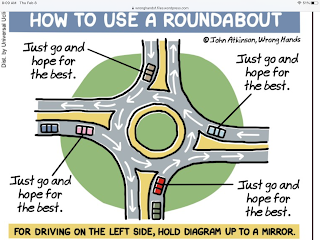
Today is your day Boomer! How is your driving confidence when it comes to roundabouts? ICBC did a recent survey that shows drivers, like Boomers, generally do well in roundabouts, do better in single lane situations, but don't understand multi-lane rounders very well. We have three roundabouts in my hometown and they do work very well....except for big trucks I guess. But according to ICBC, here are the official "do's and don'ts" of navigating roundabouts: "Slow down as you approach a roundabout. Yield to pedestrians or cyclists. Know where you are going. Yield to any traffic already in the roundabout. Do not change lanes in a roundabout. Don’t drive alongside large vehicles in roundabouts. Large vehicles may need more space in roundabouts. Signal “right” before exiting the roundabout.**In a multi-lane roundabout: If you want to turn left, use the left lane. If you want to turn right, use the right lane. If you want to go straight, use the left or right lane." The two biggest faults I notice are assuming you have the right-of-way too quickly and not signalling as you exit. Most importantly, accidents are way down compared to stop-light and stop-sign intersections! Drive well BOOMERS and cheers!


Comments
Post a Comment